The Umesh Chronicles
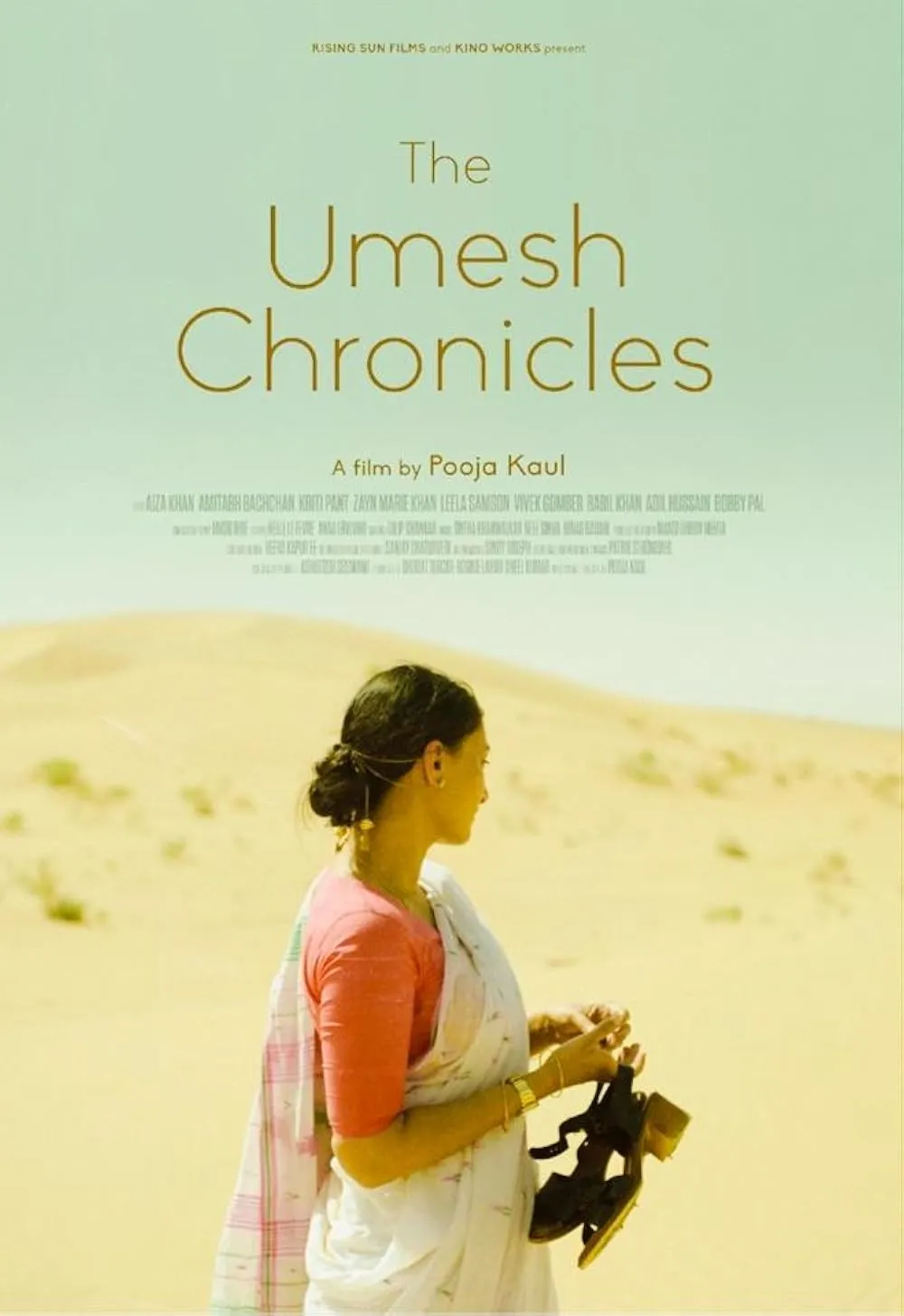
I recently watched The Umesh Chronicles at the Stockholm Film Festival. It is a coming-of-age story of Radha, a young Indian (Kashmiri pandit) girl in a middle-class family in the 80s. Even from a young age, Radha is shown to be sharp yet pensive. The movie feels at times like a long dream sequence, exploring the interplay of memory, history, and social structures, and the weight they tend to carry. The pacing throughout the movie, both of the camera and the characters, also feels deliberate with long, slow takes that immerse the viewer in the daily rhythms of the family.
There are moments that feel poignant, such as the portrayal of Radha’s summer vacation at her grandparents home. Growing up in a time where the internet hadn’t yet fully penetrated daily life, I was reminded how as children the best entertainment in the Indian summer used to be to just walk around with your siblings to either find or create entertainment, something that today feels almost like a bygone activity. I loved also the portrayal of the older characters randomly breaking out into song while going about their daily lives. It might seem to an unfamiliar audience like utilising a typical Bollywood song-and-dance trope but is actually a very familiar experience growing up in a Kashmiri pandit household. When the grandmother casually gestures in Kashmiri phrases or says to her granddaughter, “wal shong me nish” (come, sleep with me) as she lays in bed, I felt transported to my own childhood. While Kashmiriyat is not the focus of the film by any means, being able to relate to these small details of a Kashmiri household make the lives of the characters feel genuine and make the movie seem whole.
Besides, there is also the exploration of the interplay of two social hierarchies --- the middle-class and the working class --- and the quiet symbiosis they share. There’s an understated beauty in their mutual acts of hospitality towards each other that is also framed within the bounds of a social hierarchy. This I feel is unique to India in some ways where a warmth exists even in the order and the order exists despite a sense of care. There are occasions when both sides reach across that social barrier a bit and offer a generosity towards each other. One poignant scene depicts two ladies in conversation, one the house help and the other the lady of the house. The help is offering “ghar ke nuske” (home remedies) of turmeric and chalk to the lady of the house --- an act of imparting knowledge in a moment where she becomes the learned and the lady of the house becomes the learner. This moment is warm and generous and such bonds often arise between people working and living in close proximity, yet it is honest in its portrayal of the social order: the lady of the house relaxing on a chair while the help is seated on the floor leaning against a column. Yet, both are comfortable in their own places. This is a nuance that is often felt in India but is hard to explain or understand, when what is right and just is not always black and white. I appreciated that the movie does enough to showcase how both groups support and accept each other in their own way and leave the judgment of it to the viewer.
The movie manages to evoke a sense of nostalgia for an era where time seemed to flow more gently. Even as the chaotic hustle of modern India occasionally seeps in as Radha grows up, the cinematography maintains a sort of old-world charm to it. There is the occasional dimly lit interior of the grandparents home and character poses that feel inspired from vintage Bollywood. In one particular scene, it’s dark in the evening and a woman leans pensively against a column humming a tune to herself. The camera shows a closeup of her expression, a scene that felt almost reminiscent of old Dev Anand movies that my parents used to watch.
I felt that, at its heart, The Umesh Chronicles is a story about the “common man” and so it is fitting as well that Umesh, the titular character, doesn’t even make an appearance until almost the end of the film. Even then, his appearance is brief, almost as if in passing, as if he exists more as an idea than as a person. It feels almost like Umesh could have been anyone. It made me think of all the people my own family had as help growing up, from the help at home to the familiar neighborhood Istri. People who came, stayed, and left, occasionally never to be heard from again, and yet gave us memories that come up now and again. There was also a specific scene shot at Perch in Khan Market that gave me joy. Watching it unfold, I was reminded of some of my own cherished memories in Delhi of catching up with some of my closest friends over many Gin and Tonics at Perch in Vasant Vihar.