Spiritual Garden
Week 04
I once read an old adage about a gardener with an impeccably maintained lawn. When asked how he kept the grass so pristine, he replied that one just needs to start with some good grass and roll it a little bit every day. His inquisitor, understandably skeptical, pressed further — surely it wasn’t that simple? The gardener’s response was modest but direct: that’s all one needs to do every day for about 600 years.
I don’t remember where I first read this but it has remained in memory. The idea itself isn’t novel — often oversimplified in modern parlance — yet its simplicity is enticing. There’s something in the steady, almost invisible labor of tending to a garden that mirrors a form of ritual that becomes a guiding light of sorts.
Wang Xiaobo, whose compilation of essays, Pleasure of Thinking, I’m reading this week also mentions a spiritual garden. Growing up in mainland China, Wang recalls how certain ideas were tightly regulated during a time of particular political tension. Certain books became frowned upon and his father, a philosophy professor, kept those books locked up in a cabinet. During his early teens, Wang’s older brother would prod open the cabinet. He would then convince Wang, thanks to his slim hands, to “steal” the books. They would read the books in secret, at the cost of many beatings from their father. Nevertheless, they continued and the love of reading at a young age became a stronghold in Wang’s life. Reading became his spiritual garden.
Around the start of this year, I decided one of my themes for the year would be to try to get back into writing. This, I suppose, is my spiritual garden, though it is still a hypothesis. I say that because even though I have returned to writing time and again, it is not something I have tended to actively for a few years. For a while now, I have not written much of what I wanted to write. By this, I mean I have written a lot of things, technical and otherwise, including most recently an entire master’s thesis, but they have not been creative endeavours in the way I view writing as a creative endeavour: a practice in taking parts of your lived experience from mind to paper. For a few years, this garden remained untended, covered in all sorts of moss and weeds and unwanted shrubbery. This state reflected in my mind as well and took shape occasionally as complaints to close friends of feeling creatively unmoored. Yet, I’ve had half-shaped projects in my head throughout this time.
It’s worth noting that craft-as-spiritual-garden need not be the centerpiece of one’s life. Writing is far from a daily ritual for me. I simply don’t have the time or the discipline, and I’ve learned to carry ideas in my head, letting them gestate and connect over time. More often than not, writing them down results in me losing them so my pieces tend to come out in one full word-vomit of a draft. This piece, for instance, came together between 6 PM tonight and a little after midnight, with breaks for cooking and cleaning. If I’d spent the whole week refining it, the quality may have been better — but I’m intentionally trying to avoid this idea of refinement. The craft is simply a balancing act. A totem pole that helps the tightrope walker with balance but holds no lasting importance to the main act.
Orwell too wrote about gardening as something that balanced his anxieties and kept him sane. This act of tending to a garden is a ritual — steady, deliberate, and grounding. A ritual moulded around some sort of craft — practiced over a prolonged period of time — begins to take the form of a spiritual garden. For now my ritual is simply to show up. To try to clear a little bit of space out in this garden every week so the tending can begin and something eventually starts to take shape. This is still the early stages, and I keep getting distracted chasing imaginary garden bugs in the form of changes I want to make on this site, but hopefully, that feeling will settle down as the weeks go by.
-x-
On an unrelated note, this process also got me thinking about the best way to have a blog in 2025. For all the advancements in tech, creating your own website — the original digital real estate — still feels sucky and frustratingly corporate. As a techie, I can host my own domain and content. But for my non-technical friends, the options are limited and often fall into these categories:
- VC-funded platforms that prioritize investors over creators (ex: Medium).
- Platforms where you share space with awful people (ex: Substack, X).
- Platforms with dubious content ownership.
- Too complicated for non-technical people (ex: Hugo, which I use)
- Paid services, but unclear what you get in terms of reach/community (ex: Ghost, Buttondown)
Options 4 and 5 aren’t necessarily bad; they cater to different audiences. In fact, I think that a paid service is probably a minimum. If I were starting fresh as a non-technical person, I’d probably go with Bear Blog. I’ve been following it on and off for a while and feel that it has a quirky, early-2000s internet vibe with the larger community as well as each person giving identity to their spaces with customisation. My own end-of-the-post sections for this series are inspired by a blog I found there. It also helps that the creator of Bear, Herman, considers the product as his garden. There is something to be said about tending to your own corner of the web, however big or small.
🥘 Food
📚 Reading
- Pleasure of Thinking, Wang Xiaobo
- On Not Knowing, Emily Ogden
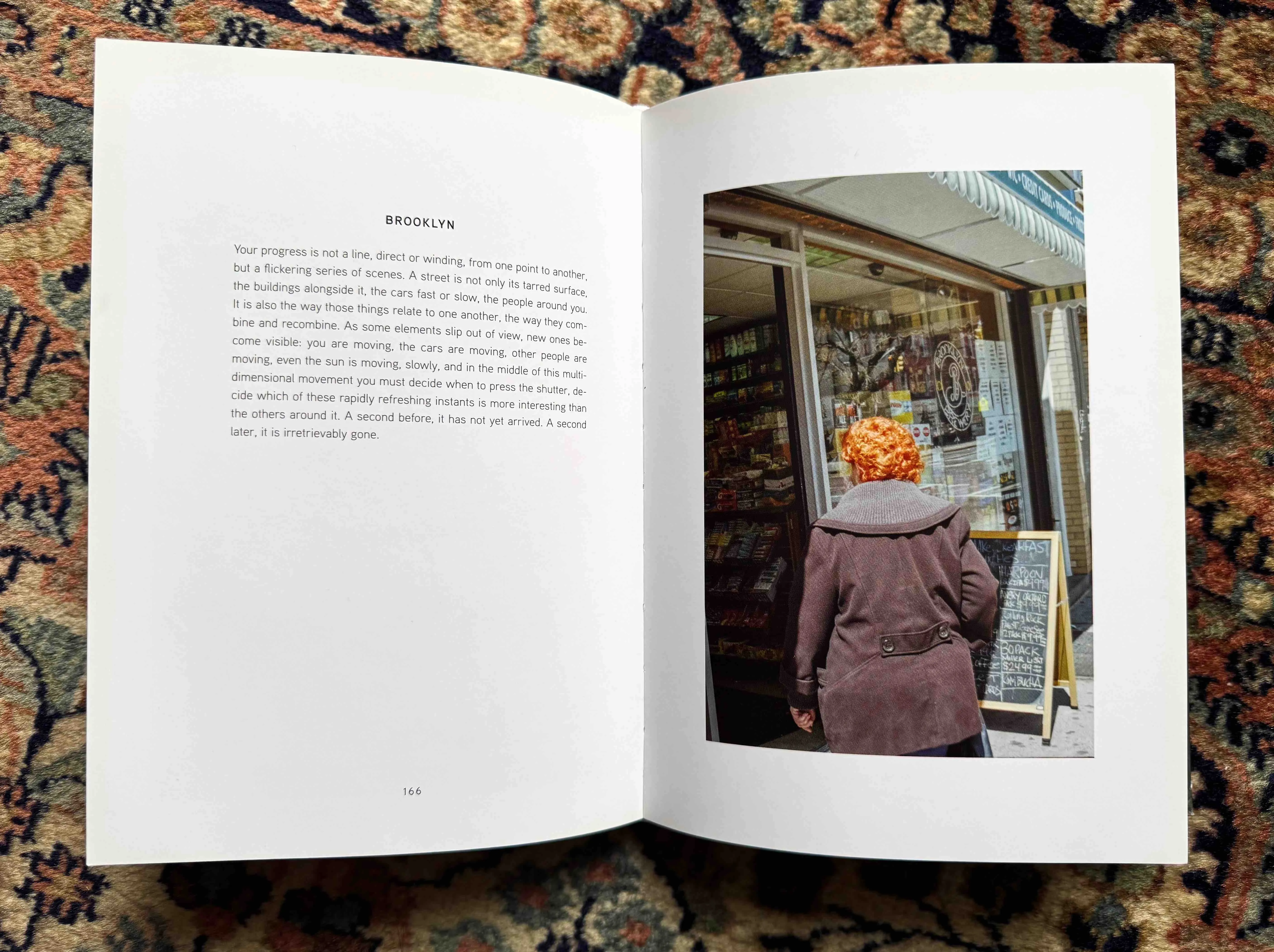
- “Your progress is not a line…”: